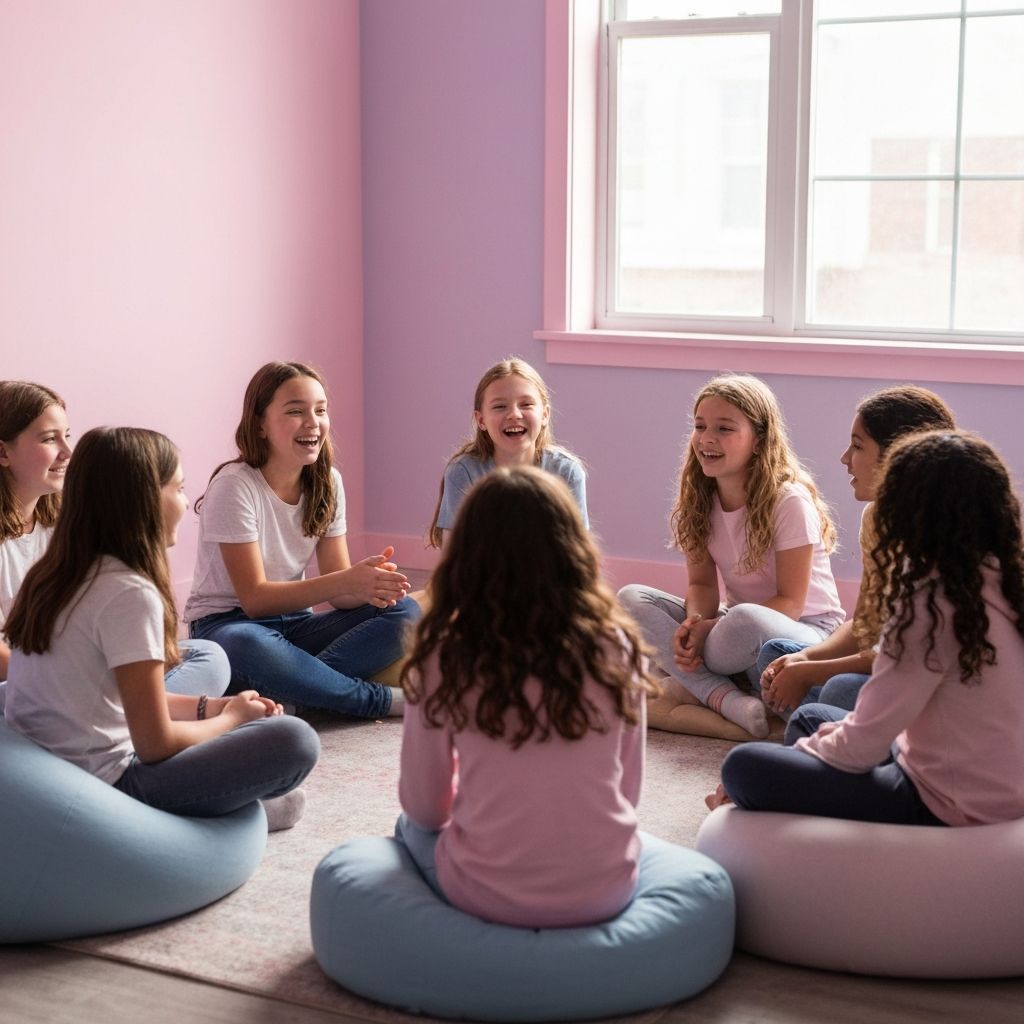
When it comes to building confidence and social skills in tween girls, bigger isn't better. Research consistently shows that small, intimate group settings create the conditions for deeper connections and faster growth. Here's why.
Everyone Gets Seen and Heard
In a group of 6-8 girls, there's no place to hide - and that's a good thing. Every girl has the opportunity to share, to be acknowledged, and to contribute meaningfully to discussions. In larger programs, quieter girls often fade into the background while more confident ones dominate. Small groups create space for every voice.
This visibility matters for building confidence. When a girl shares something vulnerable and receives support from her peers, it reinforces her sense of worth. She learns that her thoughts and feelings matter - a lesson that's hard to internalize in a crowd.
Deeper Relationships Form
Anthropologist Robin Dunbar's research on social groups suggests that humans can only maintain about 5 close friendships at any given time. Small groups honor this natural limit, allowing girls to form meaningful connections rather than superficial ones.
Over the course of a program, girls in small groups often develop genuine friendships that extend beyond session time. They remember each other's stories, check in about ongoing challenges, and celebrate each other's wins. This kind of connection simply doesn't happen as easily in larger settings.
Why 6-8 Girls Is the Sweet Spot
- Too small (2-4): Limited perspectives, too much pressure on each person
- Just right (6-8): Diverse viewpoints, manageable relationships, everyone participates
- Too large (10+): Girls get lost, cliques form, quieter voices disappear
Safe Practice for Real Life
Small groups provide a safe laboratory for practicing social skills. Girls can try speaking up, setting boundaries, handling disagreement, and being vulnerable - all with lower stakes than their school or neighborhood friendships.
A skilled facilitator can guide these interactions, helping girls navigate challenges in real-time and providing feedback that builds their skills. This kind of personalized attention is impossible in larger programs.
The Science of Belonging
Research on belonging shows that feeling truly known by others is essential for wellbeing. Small groups create the conditions for this: consistent membership over time, shared experiences, and opportunities for authentic self-disclosure.
When girls feel like they belong somewhere - really belong, not just show up - their confidence grows naturally. They're more willing to take risks, more resilient to setbacks, and more secure in their identity.
Quality Over Quantity
Large-scale programs can reach more girls, but the impact per girl is often diluted. Small groups prioritize depth over breadth, investing more in each participant. The result is more meaningful transformation, stronger relationships, and skills that actually stick.
At RealMe, we keep our groups small because we've seen the difference it makes. Every girl deserves to be truly seen, heard, and known - and that happens best in an intimate setting where she can't get lost in the crowd.